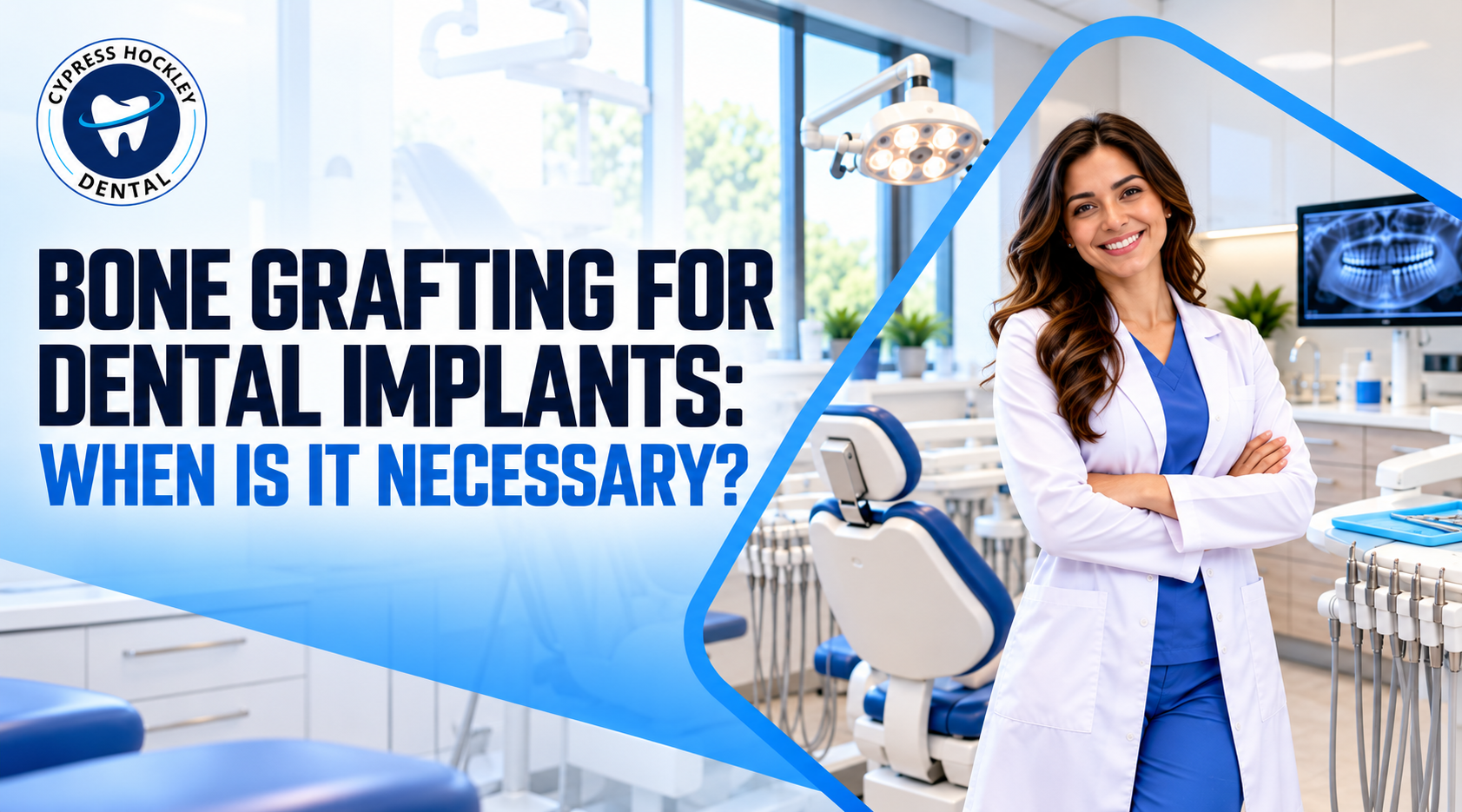
Are you searching for bone grafting for dental implants because you have been told your jawbone may not be strong enough? A dental bone graft procedure may help rebuild areas where bone has been lost due to tooth extraction, gum disease, or injury.
At Cypress Hockley Dental, patients can explore dental implant care and discuss their oral health needs. Understanding when bone grafting is necessary for dental implants can help you prepare for treatment, learn about healing, and understand whether bone graft before dental implant surgery may be needed in your case.
What Is Bone Grafting for Dental Implants?
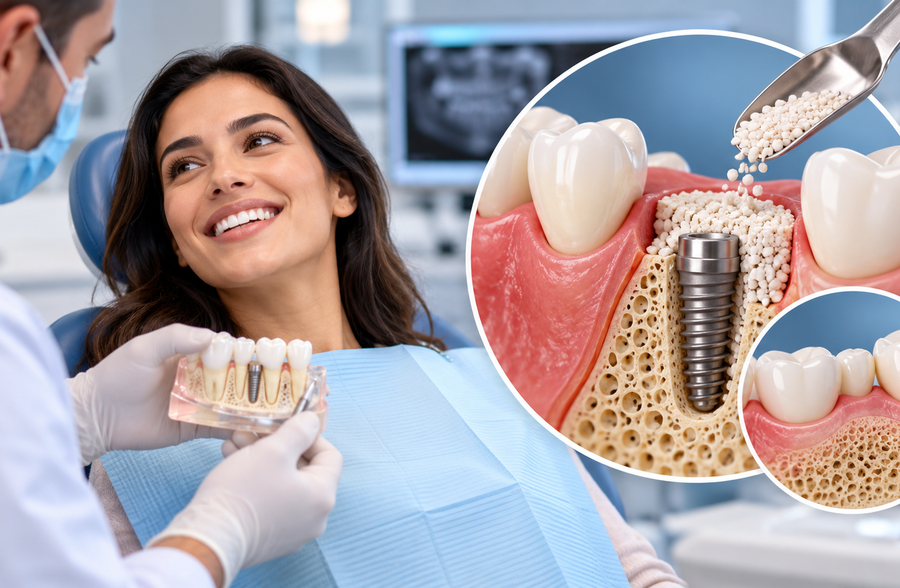
Bone grafting for dental implants is a procedure that adds bone material to areas of the jaw where bone is too thin or weak to support an implant. A dental bone grafting procedure helps encourage new bone growth and create a stronger foundation for implant placement.
The graft material may come from the patient, a donor, an animal source, or a synthetic substitute. Depending on the amount of bone loss, bone grafting before dental implant surgery may be completed separately or during implant placement. A dental examination and imaging help determine whether it is needed.
When Is Bone Grafting Necessary for Dental Implants?
Bone grafting for dental implants may be necessary when the jawbone lacks enough height, width, or density to securely support an implant. Common causes include bone loss after tooth extraction, advanced gum disease, injury, or wearing dentures for an extended period. A dentist evaluates your jawbone and overall oral health to determine whether grafting is needed before implant placement.
In some cases, a sinus lift for dental implants may be recommended when there is insufficient bone in the upper back jaw. The decision depends on your individual anatomy, the implant location, and the amount of existing bone. A dental examination and 3D imaging can help determine when bone grafting is necessary for dental implants and identify an appropriate treatment plan.
What Are the Signs You May Need a Dental Bone Graft?
Certain dental conditions may indicate signs you need a dental bone graft, especially if you are considering dental implants. Common signs include:
- Missing teeth for a long time: The jawbone may shrink after tooth loss.
- Bone loss after tooth extraction: The bone may gradually lose volume at the extraction site.
- Advanced gum disease: Damage to the tissues supporting teeth can lead to jawbone loss.
- Previous dental injury: Trauma may affect the amount of bone available for an implant.
- Insufficient jawbone for dental implants: Your jaw may lack the height or width needed to support an implant securely.
- Long-term denture use: Some patients experience gradual jawbone changes over time.
At Cypress Hockley Dental, a dental examination and appropriate imaging can help assess your dental implant eligibility and determine whether bone grafting may be necessary for your treatment plan.
What Happens During a Dental Bone Grafting Procedure?
A dental bone grafting procedure begins with a dental examination and imaging to assess the amount of available jawbone. The dentist then places suitable graft material in the area where additional bone is needed. Depending on the treatment plan, the graft may be performed before or during dental implant surgery.
After the procedure, proper dental bone graft aftercare is essential for healing. Your dentist may recommend a soft-food diet, careful oral hygiene, and avoiding pressure on the treated area. Bone graft healing time varies by patient and procedure, and the dentist will determine when the site is ready for implant placement.
About Cypress Hockley Dental
Cypress Hockley Dental provides personalized dental care, including dental implant services, to help patients work toward healthier smiles. The practice uses modern dental technology, including 3D imaging, to assess oral health and support individualized treatment planning.
Patients considering bone grafting for dental implants in Cypress can schedule a consultation to discuss their jawbone health, treatment options, and preparation for implant placement.
Why Choose Cypress Hockley Dental for Dental Implant Care?
Choosing the right dental practice is an important step when considering bone grafting for dental implants. At Cypress Hockley Dental, patients can discuss their dental concerns, explore suitable treatment options, and receive personalized guidance based on their oral health needs. The practice uses modern dental technology to support accurate evaluations and individualized treatment planning.
- Advanced Dental Technology: CBCT and 3D imaging help evaluate jawbone structure, identify areas of bone loss, and support planning for dental implant treatment.
- Personalized Treatment Plans: Every patient has different dental needs. A thorough evaluation helps determine your dental implant eligibility and whether additional procedures may be needed before implant placement.
- Comprehensive Implant Care: If you have insufficient jawbone, a dental bone graft procedure may help rebuild the affected area and prepare it for an implant. Your dentist can explain the recommended approach based on your individual condition.
- Guidance Throughout Treatment: Understanding the process can make dental care less stressful. You can discuss the procedure, expected bone graft healing time, recovery instructions, and follow-up appointments with your dental team.
- Patient-Focused Approach: Clear communication and personalized recommendations help you understand your options and make informed decisions about your oral health.
- Convenient Local Care: If you are exploring bone grafting for dental implants in Cypress, a consultation at Cypress Hockley Dental can help you understand the next steps and plan your treatment.
At Cypress Hockley Dental, the goal is to help patients understand their dental implant options and receive care tailored to their needs. Schedule a consultation to discuss whether bone grafting is appropriate for you and learn how to prepare for your dental implant journey.

Schedule a Dental Implant Consultation in Cypress, TX
If you are considering bone grafting for dental implants in Cypress, scheduling a consultation is a helpful first step. At Cypress Hockley Dental, you can discuss your oral health, learn whether you have sufficient jawbone to support an implant, and explore personalized treatment options.
Contact Information
Cypress Hockley Dental
Address: 27160 US-290, Suite 206, Cypress, TX 77433
Phone: +1 (832) 345-1669 | (832) 532-6537
Email: info@cypresshockleydental.com
Conclusion
Bone grafting for dental implants can help restore lost jawbone and create a stronger foundation for dental implant placement. Whether you need a dental bone graft procedure depends on your jawbone’s condition, the location of the missing tooth, and your overall oral health.
If you are considering dental implants, Cypress Hockley Dental can help you understand your treatment options through a personalized evaluation. Schedule a consultation in Cypress, TX, to discuss your dental needs and determine whether bone grafting may be necessary for your smile restoration journey.
FAQs – Bone Grafting for Dental Implants: When Is It Necessary?
Q1. Is bone grafting necessary for dental implants?
Ans. No, not everyone needs bone grafting. It is recommended when the jawbone lacks sufficient height, width, or density to support an implant securely.
Q2. How long does a dental bone graft take to heal?
Ans. Bone graft healing time varies depending on the graft size, location, and individual healing. It may take several months before the area is ready for dental implant placement.
Q3. Is bone grafting painful?
Ans. The procedure is typically performed with local anesthesia to minimize discomfort. Some soreness, swelling, and tenderness may occur during recovery.
Q4. What are the different types of dental bone grafts?
Ans. Common types of dental bone grafts include autografts (from your own body), allografts (from a donor), xenografts (from an animal source), and synthetic graft materials.
Q5. Can I get dental implants without a bone graft?
Ans. Yes, if you have a sufficient healthy jawbone to support the implant. Your dentist will assess your bone structure and oral health before recommending treatment.